

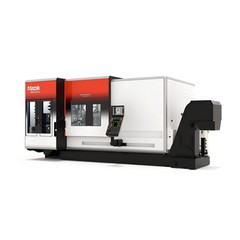
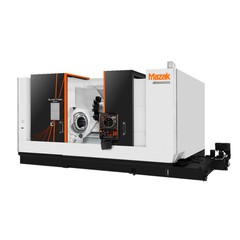
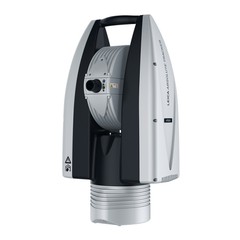
As the manufacturing industry moves towards high-end and intelligent manufacturing, precision manufacturing equipment, as a core support, is increasingly demonstrating its technological leap and industrial responsibility. This type of equipment encompasses high-precision devices such as turning centers, machining centers, and grinding machines. With its superior process integration capabilities and stable machining performance, it has become an indispensable foundation of the modern industrial system.
Technological breakthroughs in precision manufacturing equipment are first reflected in the deepening of composite machining capabilities. Traditional equipment has a single function, requiring multiple machine tools to process complex parts. However, the new generation of equipment integrates multiple processes such as turning, milling, and drilling, achieving "one-time clamping, full-process machining," significantly shortening the production cycle and reducing positioning errors. For example, a turning center equipped with a power turret and C-axis indexing function can accurately complete the composite cutting of irregularly shaped rotating parts, meeting the stringent requirements of aerospace, new energy, and other fields for complex structures.
The integration of intelligent technologies further expands the application boundaries of the equipment. Relying on real-time data acquisition and adaptive control algorithms, precision manufacturing equipment can dynamically monitor parameters such as cutting force and temperature, automatically compensate for tool wear and thermal deformation, and ensure micron-level machining accuracy. Some models even possess self-optimization capabilities for process parameters and remote operation and maintenance. Through digital twin technology, they achieve virtual debugging, significantly reducing debugging costs and human error, providing technical support for flexible production and personalized customization.
From an industry perspective, precision manufacturing equipment is the "mother machine" of high-end manufacturing, and its technological level directly relates to the independent controllability of key components. In the automotive, energy, and medical fields, from core engine components to implantable medical devices, high-precision machining capabilities are essential to ensure product performance and safety. Simultaneously, the upgrading and iteration of equipment can drive the coordinated development of the CNC system, precision cutting tools, and other related industrial chains, forming a technological radiation effect and helping the manufacturing industry climb to the high end of the global value chain.
Currently, facing the demands of green manufacturing and low-carbon transformation, precision manufacturing equipment is evolving towards high efficiency and energy saving, reducing energy consumption through optimized structure and intelligent control. As the core engine of manufacturing transformation and upgrading, its continuous innovation will inject strong momentum into high-quality industrial development.