

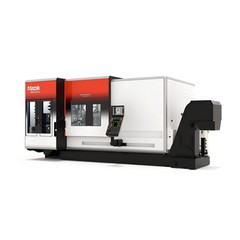
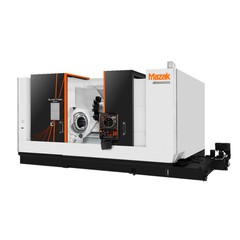
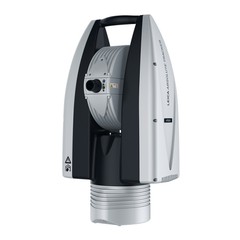
As the manufacturing industry accelerates its move towards intelligence, high precision, and flexibility, measuring machines (MCMs), as core equipment for acquiring spatial data and geometric features, are seeing their application prospects expand with unprecedented breadth and depth. They are no longer limited to the traditional "post-production quality control" but are gradually being embedded into the entire process of product development, manufacturing, and even lifecycle management, becoming a key fulcrum for improving industrial quality and efficiency.
In the field of precision manufacturing, the role of measuring machines is extending from single inspection to "online monitoring + real-time feedback." Industries such as aerospace, automotive powertrain, and high-end molds require machining precision of complex curved surfaces down to the micrometer or even sub-micrometer level. Traditional offline sampling inspection methods are insufficient to meet the high-frequency, full-size quality control needs. The new generation of measuring machines, with high-speed scanning, multi-sensor fusion, and intelligent algorithms, can simultaneously collect data during processing, analyze dimensional and positional deviations in real time through edge computing, and feed compensation commands back to the machine tool, forming a closed-loop control of "machining-measurement-correction." This online measurement mode not only shortens the production cycle but also keeps the scrap rate at an extremely low level, significantly improving resource utilization efficiency.
In the wave of smart manufacturing, the interconnectivity of measuring machines (MMs) has become a crucial area for expanding applications. By interfacing with industrial IoT and digital twin platforms, MMs can upload massive amounts of inspection data to the cloud in real time, building a correlation model between equipment status, process parameters, and product quality. This maps the entire lifecycle data of physical products into a virtual space, supporting predictive maintenance, process optimization, and quality traceability. For example, in the production of new energy vehicle battery casings, MMs and digital twin systems can collaborate to predict welding deformation trends in advance, guiding dynamic adjustments to tooling and fixtures, ensuring structural strength and sealing performance from the source.
The rise of emerging industries further broadens the application boundaries of MMs. In the semiconductor industry, critical dimensions such as the micro-pitch and lead coplanarity of chip packaging require nanometer-level precision measurement, driving the deployment of ultra-precision measuring machines (MTMs) in cleanroom environments. In the medical device field, the personalized design and manufacturing of artificial joints and dental implants rely on MTMs to quickly acquire patient anatomical data and convert it into processing instructions, enabling "tailor-made" precision medicine. In the fields of cultural relic preservation and digitization, MTMs, through non-contact scanning, can efficiently acquire the three-dimensional morphology of cultural relics, providing a scientific basis for restoration plan formulation and digital archiving.
Technological iteration will continue to unleash the potential of MTMs. The introduction of artificial intelligence algorithms enables equipment to automatically identify defect types and optimize measurement paths; modular design supports flexible configuration of probes, measuring ranges, and software functions according to user needs, lowering the application threshold for small and medium-sized enterprises. In the future, with the integration of cutting-edge technologies such as quantum sensing and terahertz imaging, the precision limits and application scenarios of MTMs may see revolutionary breakthroughs.
The application prospects of MTMs are essentially a deep integration of precision measurement technology and industrial needs. They are both the "eyes" of high-end manufacturing and the "bridge" for intelligent transformation. Driven by innovation and guided by standards, measuring machines will undoubtedly demonstrate their value in more fields, injecting strong momentum into building a high-quality and efficient modern industrial system.