

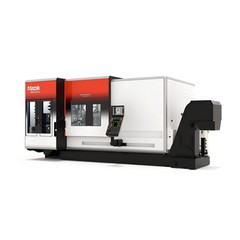
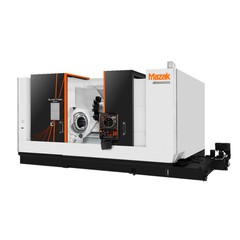
As core equipment for achieving high-precision manufacturing, the accurate determination of a machining machine's performance status relies on a scientific and systematic inspection process.Inspection not only verifies the initial accuracy of the equipment during installation and commissioning but also permeates daily use and periodic maintenance. Its aim is to promptly identify deviations and prevent malfunctions through quantitative data comparison with standards, ensuring the stability and consistency of the machining process. Establishing and implementing a standardized inspection process is a necessary prerequisite for ensuring the long-term performance of the machining machine's design capabilities.
The first step in the inspection process is preliminary preparation and environmental verification. Inspections should be conducted in a constant temperature, clean, and vibration-controlled environment to avoid interference from external factors. Before inspection, it is necessary to confirm that the machine tool has been fully preheated, all moving parts are within their normal operating temperature range, and verify the calibration validity and accuracy class of measuring instruments and gauges to ensure they meet the inspection requirements. Key components such as guideways, lead screws, and spindle systems should be visually inspected to eliminate obvious damage and contamination, providing a reliable foundation for subsequent measurements.
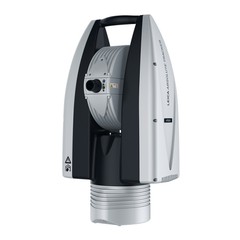
Geometric accuracy inspection is the core of the process, typically including straightness, perpendicularity, parallelism, and positioning accuracy. Common measuring tools such as laser interferometers, ballbars, or precision levels are used to measure the motion trajectory of each coordinate axis and compare it item by item with machine tool accuracy standards. During inspection, the coordinate axes must be run along a predetermined path and speed, collecting data from multiple points to assess the overall error distribution, with particular attention paid to the accuracy retention capability at reversal points and the end of long strokes. For multi-axis machining centers, multi-axis composite trajectory accuracy inspection should also be performed to verify its shape fidelity in machining complex contours.
Spindle performance inspection follows closely, focusing on radial runout, axial runout, and spindle temperature rise characteristics. By clamping a standard mandrel or test bar onto the spindle and using a dial indicator or capacitive micrometer to measure runout at different speeds, the spindle bearing condition and dynamic balance performance can be determined. Temperature rise testing records the temperature curve after continuous operation for a certain period to assess the impact of thermal stability on machined dimensions.
Dynamic performance and cutting tests are important supplements to the inspection process. Typical test pieces can be selected for actual cutting to measure the surface roughness, dimensional deviations, and geometric tolerances, verifying the machine tool's overall performance under load conditions. This step also verifies the coordination of auxiliary systems such as cooling, chip removal, and tool changing, ensuring the equipment's reliability under real-world operating conditions.
The test results must be compiled into a complete report, including measurement conditions, data charts, deviation analysis, and handling recommendations. For items exceeding tolerances, the cause should be traced, potentially involving mechanical wear, assembly errors, CNC parameter deviations, or environmental influences, and a repair or compensation plan should be developed accordingly. The testing process should be systematized, executed daily, weekly, monthly, or on a specific cycle, and all records must be archived to form a traceable equipment health record, providing a basis for preventative maintenance and accuracy restoration.
Overall, the machining center testing process prioritizes environmental control, focusing on geometric accuracy, spindle performance, and dynamic cutting capabilities. Through standardized measurement and data analysis, it achieves an objective evaluation of the equipment's condition and timely correction. Strict adherence to this process not only ensures continuous and stable machining quality but also extends equipment lifespan and enhances the overall reliability and competitiveness of the manufacturing system.