

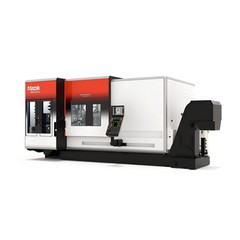
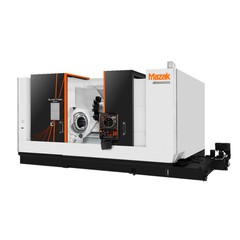
As high-precision manufacturing equipment, the long-term stable operation and processing quality of machining machines depend not only on design and manufacturing quality but also on scientific and systematic daily maintenance.Daily maintenance is not merely routine upkeep; it is a crucial step in preventing malfunctions, extending service life, and maintaining consistent precision. It should be incorporated into the core of the enterprise's production management system.
The primary aspect of daily maintenance is environmental and aesthetic upkeep. Machining machines should be placed in a temperature- and humidity-controlled, cleanroom environment to prevent dust, oil, and cutting fluid splashes from adhering to the guide rails, lead screws, spindles, and electrical enclosure surfaces. After each day's operation, exposed parts should be wiped with a lint-free soft cloth to remove chips and liquid residue. Protective covers, door seals, and cooling pipes should be checked for damage or leaks to prevent foreign object intrusion or loss of lubricating and cooling media. Maintaining a clean appearance helps in the early detection of cracks, rust, and other abnormalities.
Lubrication management is of paramount importance in daily maintenance. Moving parts such as guide rails, lead screws, bearings, and transmission gears require lubrication or grease replenishment according to the oil type and frequency specified in the equipment manual. Insufficient oil or deteriorated oil will increase frictional resistance, causing positioning deviations and abnormal wear; excessive lubrication may attract dust, forming a source of abrasive wear. During maintenance, the smoothness of the oil circuit, the oil level indicator, and the operating status of the lubrication pump should be checked. If necessary, samples should be taken to test viscosity and contamination to ensure that the lubrication system is always in good working condition.
Maintenance of the cooling and chip removal systems directly affects the stability of the machining process and tool life. The coolant concentration, temperature, and volume should be checked daily, and iron filings on the water tank filter and magnetic separator should be cleaned to prevent impurities from circulating and causing nozzle blockage or reduced heat transfer performance. The chip removal mechanism should be emptied regularly, and the operation of the drive chain or spiral chip conveyor should be checked to avoid chip accumulation leading to overload or jamming, which would affect the cleanliness of the machining area and the safety of the machine tool.
Inspection and fine-tuning of precision-related parts are also essential. Routine maintenance should include simple checks of spindle radial and axial runout, backlash of each coordinate axis, and positioning accuracy. Any deviations should be adjusted or reported for repair promptly. Simultaneously, the cleanliness and integrity of tool holders, drawbars, chucks, and power tool interfaces should be checked to ensure clamping rigidity and coaxiality meet machining requirements.
Electrical and control system maintenance focuses on dust and moisture prevention and connection reliability. Dust accumulation on control panels, control cabinet filters, and fan blades should be cleaned regularly. Cable joints should be checked for looseness or oxidation to ensure stable signal transmission and power supply. For battery-powered encoders or memory devices, batteries should be replaced periodically to prevent data loss.
Systematization and record-keeping are essential for effective routine maintenance. Enterprises should develop maintenance procedures covering daily, weekly, and monthly inspection items, clearly defining responsible personnel and implementation standards. Inspection results, lubrication replacements, and troubleshooting information should be archived to create traceable equipment health records, providing a basis for preventative maintenance and life assessment.
In summary, routine maintenance of machining centers is a systematic project integrating environmental management, lubrication and cooling maintenance, precision monitoring, and electrical maintenance. Only by basing our practices on standardized, meticulous, and continuous care can we ensure that equipment is always in excellent working condition, providing stable, precise, and efficient processing capabilities for the manufacturing process.