

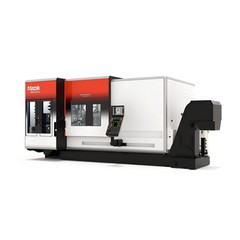
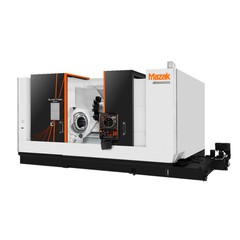
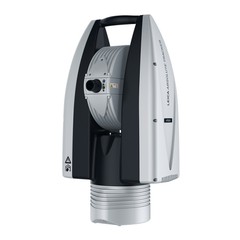
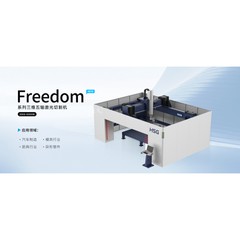
Machine tools, as key equipment in modern manufacturing, broadly refer to CNC or non-CNC machine tools that use mechanical cutting, forming, or special processes to machine the dimensions and shapes of metals and other engineering materials. They encompass various types, including milling machines, lathes, machining centers, grinding machines, and EDM machines. They can achieve high-precision, high-efficiency parts manufacturing in single or multi-stage operations, serving as an indispensable foundational platform in industrial production and precision machining systems.
Structurally and functionally, the core of a machine tool lies in the precise control of the relative movement between the tool and the workpiece to remove excess material and form the required geometric shape and dimensional accuracy. Traditional machine tools often operate manually or semi-automatically, requiring operators to adjust feed and cutting parameters based on experience. Modern machine tools, however, are generally equipped with CNC systems, driving multi-axis linkage through programmed instructions to achieve automated machining of complex contours and multi-dimensional structures. CNC machine tools not only ensure stable and repetitive machining processes but also improve product consistency and quality reliability through parameter optimization and process monitoring.
Machine tools are typically classified based on their machining methods and applications. Milling machines excel at machining planes, grooves, curved surfaces, and complex contours, performing multiple operations such as drilling, boring, and reaming. Lathes primarily handle the machining of the outer diameter, end faces, and threads of rotating parts. Machining centers, by adding tool magazines and automatic tool changers, enable multi-process composite machining. Grinding machines are used for final finishing of surfaces to achieve high smoothness and precise dimensions. Specialized machining equipment such as EDM machines can play a role in difficult-to-cut materials or complex microstructures. Different types of machining centers each play a specific role in the process chain, forming a complete parts manufacturing capability.
In terms of application areas, machining centers widely serve industries such as automotive, aerospace, mold manufacturing, energy equipment, medical devices, and general machinery manufacturing. Whether it's engine blocks, aerospace structural components, precision molds, or micro-medical devices, all rely on machining centers to achieve the shaping of critical dimensions and positional accuracy. Their high precision and high flexibility enable them to meet both large-scale standardized production and the personalized needs of multi-variety, small-batch production, providing solid support for the diversification and customization of modern manufacturing.
With the development of intelligent manufacturing, machining centers are evolving towards higher speeds, greater complexity, and greater intelligence. High-speed spindles and feed systems improve material removal rates; composite machining functions reduce process flows; and online monitoring and data analysis endow equipment with adaptive adjustment and remote maintenance capabilities. These advancements not only expand the technological boundaries of machining centers but also strengthen their strategic position in global manufacturing competition.
Overall, machining centers, with their diverse processing capabilities, continuously improving technology, and wide applicability, have become a backbone of modern industrial manufacturing, playing an irreplaceable role in driving industrial technology upgrading and quality improvement.