

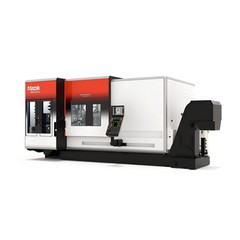
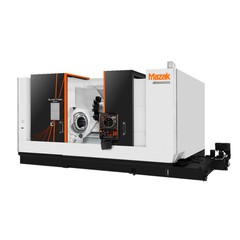
In modern manufacturing systems, logistics refers not only to the physical handling of materials but also encompasses the coordinated operation of information flow, process flow, and value flow. As a highly integrated composite CNC equipment, the turning center exhibits unique characteristics of "process cohesion" and "process hub" in the production logistics chain, playing a crucial role in shortening logistics paths, optimizing resource allocation, and improving manufacturing response speed.
From a physical logistics perspective, the process integration characteristics of turning centers significantly reduce the distance and time workpieces travel between machines. In traditional machining modes, rotating parts need to pass through multiple machines such as lathes, milling machines, and drilling machines sequentially, involving multiple clamping, handling, and waiting times, resulting in long material movement paths and high handling costs. Turning centers complete multiple processes such as turning, milling, drilling, and tapping in a single clamping, allowing the workpiece to complete most of its machining tasks at a single station. This greatly reduces the frequency of physical transfers between processes, lowers equipment occupancy, manual intervention, and work-in-process accumulation in the logistics环节, thereby achieving the shortest possible logistics path and the most efficient logistics time.
At the information flow level, the turning center incorporates a CNC system and data acquisition module, enabling real-time feedback on machining progress, equipment status, and quality inspection results. This instantaneous information transmission makes logistics scheduling and process coordination more visible and controllable. Production plans can be dynamically adjusted based on machine tool load and workpiece status, avoiding process blockages and resource idleness. The nature of logistics thus shifts from passive handling to proactive response, forming a data-driven production rhythm collaboration.
From the perspective of process flow and value flow, the turning center assumes the hub function of multiple processes converging. It integrates dispersed process steps into the same physical location, allowing connections between different processes to bypass workshop layout barriers, resulting in smoother process flow and a more continuous value creation process. This characteristic is particularly important for flexible production with multiple varieties and small to medium batches, enabling rapid changeover and process switching, shortening the conversion cycle from order to finished product, and improving the supply chain's responsiveness to market changes.
Furthermore, under the lean manufacturing philosophy, the turning center can promote the achievement of the "zero work-in-process inventory" goal. By reducing intermediate transfers and waiting times, it lowers work-in-process inventory levels, freeing up space and capital, and making the logistics system more streamlined and efficient.
In summary, turning centers possess multiple characteristics within the manufacturing logistics system, including physical flow compression, real-time information exchange, process convergence hubs, and value stream continuity. Their application not only optimizes internal logistics efficiency but also enhances the overall synergy and agility of the production system, providing solid support for building a modern, low-consumption, and efficient manufacturing logistics network.