

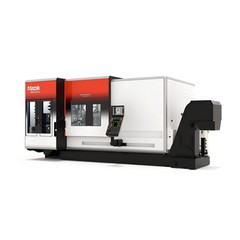
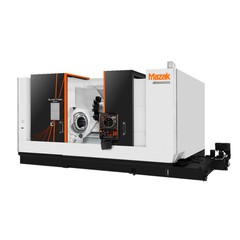
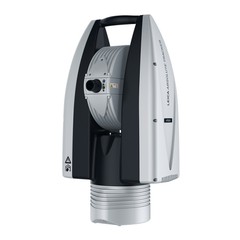
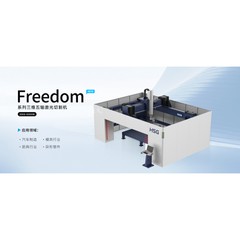
As highly integrated and automated CNC equipment in modern manufacturing, machining centers play an irreplaceable role in numerous industrial fields due to their ability to complete multiple processes such as milling, drilling, boring, and tapping in a single setup. Their applications extend beyond improving processing efficiency and precision; they enable highly flexible manufacturing and process integration of complex parts, becoming a key link supporting high-end manufacturing and large-scale production.
In the aerospace field, machining centers are used to manufacture complex components such as aircraft structural parts, engine impellers, casings, and spacecraft supports. These parts often feature thin walls, irregular curved surfaces, and high-precision hole systems. Five-axis machining centers, with their advantages of multi-axis linkage and single-setup completion, can accurately machine free-form surfaces and avoid multiple positioning errors, ensuring that aerodynamic shapes and assembly precision meet stringent standards.
The automotive industry is one of the most widespread application areas for machining centers. Components such as engine blocks, cylinder heads, gearbox housings, chassis supports, and new energy vehicle motor housings commonly utilize horizontal or gantry machining centers for multi-face milling, drilling, and boring. Automatic tool changers and pallet exchange systems enable continuous and stable mass production while ensuring the accuracy and consistency of critical mating dimensions, meeting the performance and reliability requirements of the entire vehicle.
The mold manufacturing industry is particularly reliant on machining centers. Injection molds, stamping molds, and die-casting molds often contain complex curved surfaces, deep cavities, fine ribs, and micropores, requiring precision milling and pre-machining before EDM on high-hardness materials. Vertical or gantry machining centers, combined with high-speed spindles and precision CNC systems, can achieve efficient roughing and fine corner clearing, shortening mold manufacturing cycles and improving surface quality.
In energy equipment manufacturing, machining centers are used to process key components for wind turbine main shafts, nuclear power plant valve bodies, hydroelectric turbine blades, and oil drilling equipment. These workpieces have large size ranges and high material strength, placing high demands on machine tool rigidity, stroke, and power. Gantry or large horizontal machining centers provide sufficient machining range and cutting stability, ensuring the geometric accuracy and internal quality of large structural components.
The medical device industry demands extremely high precision and surface finish for parts, such as artificial joints, dental implants, and surgical instruments. Five-axis machining centers or high-precision vertical machining centers are frequently used for milling and engraving difficult-to-machine materials like titanium alloys and cobalt-chromium-molybdenum alloys, meeting the process requirements for complex shapes and biocompatible surface treatments.
Furthermore, machining centers are widely used in general machinery, rail transportation, shipbuilding, and 3C electronic product structural components for both batch and single-piece production. They enable rapid switching between machining programs and tool configurations, adapting to flexible manufacturing models with diverse product types and small batches. The integration of automatic tool changers, pallet exchangers, and online inspection provides a high degree of automation and traceability in the production process, facilitating lean manufacturing and intelligent manufacturing.
Overall, the applications of machining centers cover a wide range, from large-scale energy equipment to micro-medical devices, from complex aerospace components to mass-produced automotive parts. Their core value lies in significantly improving manufacturing efficiency and product quality through process consolidation, precision assurance, and flexible production, driving the continuous development of the manufacturing industry towards digitalization, intelligence, and high precision.