

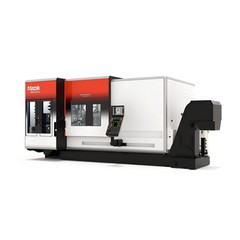
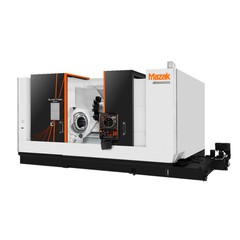
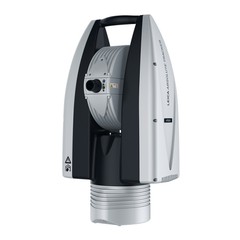
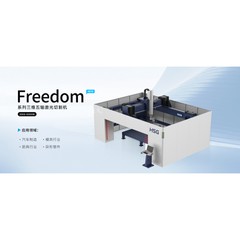
Machining centers are advanced CNC equipment in modern mechanical manufacturing, characterized by high integration and automation. They integrate multiple machining functions such as milling, drilling, boring, and tapping, and are equipped with automatic tool changers and multi-station worktables, enabling the completion of multi-process machining of complex parts in a single setup. Their emergence and development have greatly improved production efficiency, machining accuracy, and flexible manufacturing capabilities, making them core equipment for manufacturing key components in industries such as aerospace, automotive, mold making, energy, and precision instruments.
Structurally, a machining center mainly consists of a machine tool body, a CNC system, a servo drive unit, a tool magazine and automatic tool changer (ATC), a cooling and lubrication system, and a chip removal system. The machine tool body employs a high-rigidity bed and precision guideways to ensure geometric accuracy and dynamic stability under high-speed cutting and heavy load conditions. The CNC system, the "brain" of the machining center, controls the movement of each coordinate axis and the spindle speed through programmed instructions, enabling complex trajectories and multi-axis linkage machining. The servo drive unit translates CNC instructions into precise positioning and feed actions for each axis. The tool magazine and automatic tool changer automatically change tools according to the program during machining, significantly reducing manual intervention and non-machining auxiliary time. The cooling and lubrication system reduces tool and workpiece temperature and friction during cutting, extending tool life and improving surface quality. The chip removal device keeps the machining area clean, preventing chip accumulation that could affect accuracy and safety.
The core advantage of the machining center lies in its multi-functionality and high degree of automation. In a single setup, it can complete multiple processes such as milling, drilling, reaming, boring, tapping, and contour surface machining, avoiding the accumulation of positioning errors from multiple setups and improving the geometric and positional accuracy of the parts. Multi-axis machining capabilities (commonly three-axis, four-axis, and five-axis) enable the machining of workpieces with complex spatial curved surfaces, meeting the requirements of modern industrial design for shape freedom and structural integration. Automatic tool changers and pallet exchange systems, combined with these features, allow for unattended continuous machining overnight, improving equipment utilization and production cycle time.
Based on structural form and motion axis configuration, machining centers can be categorized into vertical, horizontal, and gantry types. Vertical machining centers are suitable for machining sheet metal, disc-shaped, and small to medium-sized box-shaped parts, featuring a compact structure and small footprint. Horizontal machining centers are advantageous for long, narrow, shell-shaped parts and parts requiring multi-face machining, often equipped with rotary tables to achieve multi-face machining in a single setup. Gantry machining centers are characterized by high rigidity and long stroke, suitable for machining large structural components, molds, and thin-walled aerospace parts. Five-axis machining centers, through the linkage of two rotary axes and three linear axes, can complete high-precision machining of complex free-form surfaces in a single setup, making them crucial equipment in high-end manufacturing.
With the continuous improvement of CNC technology, servo control, and information technology, modern machining centers are developing towards higher speeds, higher precision, greater intelligence, and greener operation. High-speed spindles and feed systems significantly shorten cutting time; closed-loop position feedback and thermal deformation compensation technologies ensure micron-level and even sub-micron-level precision; intelligent monitoring systems can collect data on vibration, temperature, and load in real time, enabling tool wear prediction and machining process optimization; energy-saving designs and micro-lubrication technologies reduce energy consumption and cutting fluid consumption, aligning with the concept of sustainable manufacturing.
Overall, machining centers, with their high integration, multifunctionality, and automation, have become key equipment for modern manufacturing industries to enhance their processing capabilities and competitiveness. Their continuously evolving technological system is opening up broader possibilities for the high-quality and efficient manufacturing of complex parts and is continuously driving the manufacturing industry towards digitalization, intelligence, and precision.