

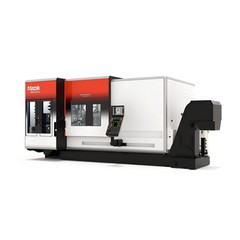
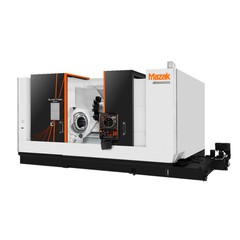
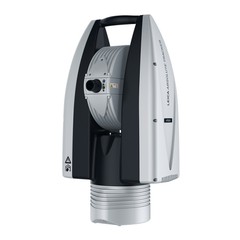
As a composite CNC machine integrating turning, milling, drilling, and other processes, the efficient operation of a turning center relies on a precise understanding of its characteristics and production needs.Through long-term practice, industry practitioners have summarized a series of practical techniques that can improve machining accuracy and efficiency, reduce failure rates and maintenance costs, and provide a path to fully unleash the machine's potential.
Firstly, in process planning, emphasis should be placed on "completing as many related processes as possible in a single setup." The advantage of a turning center lies in reducing repetitive positioning errors. Therefore, it is necessary to analyze part features during the design phase, grouping machining operations with positional requirements together, prioritizing the machining of datum surfaces and positioning holes to provide reliable references for subsequent processes. Reasonably arranging the roughing and finishing sequence, and reserving a uniform allowance for finishing during roughing, can avoid deformation caused by sudden changes in cutting forces, ensuring final accuracy.
Secondly, matching tool configuration and cutting parameters is a key technique for improving efficiency. For materials with varying hardness, tools with appropriate coatings and geometries should be selected. A parameter matrix should be established based on spindle speed, feed rate, and depth of cut, balancing metal removal rate and tool life. For milling and drilling operations in composite machining, reasonable entry and exit paths should be pre-set to reduce tool impact and prevent chatter marks. Regularly checking tool wear and establishing a lifespan warning mechanism can prevent sudden failures from affecting production continuity.
Thirdly, programming and simulation should be approached with careful verification. Utilize the 3D simulation function of the CNC system to pre-check the interference between the tool path, workpiece, and fixture, especially when C-axis indexing and multi-axis linkage are involved; the accuracy of coordinate transformation should be confirmed segment by segment. On-site debugging is recommended to combine single-segment execution with speed-reduction trial runs to promptly capture anomalies and correct the program, reducing the risk of collisions.
Fourthly, process monitoring and data utilization can form a continuous improvement loop. Using spindle load, vibration, and temperature monitoring information, the stability of the cutting state can be determined, and parameters can be adjusted promptly upon detecting anomalies. Statistical analysis of in-machine measurement data can identify trends and optimize process routes, thereby improving batch consistency and reducing rework.
In summary, the efficient application of turning centers relies on rational planning of process integration, precise matching of tools and parameters, rigorous verification through programming simulation, and closed-loop utilization of process data. Mastering and flexibly applying these techniques can achieve comprehensive optimization of accuracy, efficiency, and cost in the machining of complex parts, adding robustness and competitiveness to the manufacturing process.