

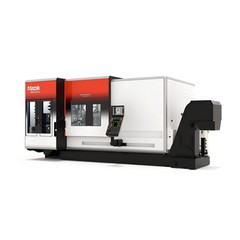
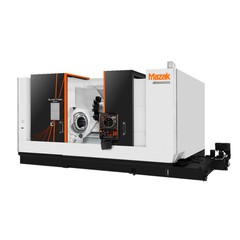
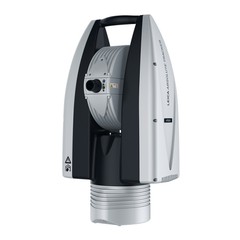
In the wave of transformation and upgrading in the manufacturing industry, turning centers, with their unique technological advantages and comprehensive efficiency, have become core equipment driving the industry towards precision, efficiency, and intelligence. Their value lies not only in breakthroughs in single processes but also in the systematic enhancement of the competitiveness of the entire industrial chain.
From the perspective of production efficiency, the core value of turning centers lies in the revolutionary change brought about by "process integration." In traditional machining methods, rotating parts need to be completed step-by-step using multiple machines such as lathes, milling machines, and drilling machines. Multiple clamping and transfers not only lengthen the production cycle but also easily affect accuracy due to accumulated positioning errors. Turning centers, by integrating turning, milling, drilling, and tapping functions, enable multi-process machining to be completed in a single clamping, shortening the manufacturing cycle of typical parts by 30%-50%, while reducing equipment occupancy and manual intervention, significantly improving production line utilization. This "one-for-many" characteristic is particularly well-suited to the flexible needs of small-batch, multi-variety production, providing enterprises with a flexible foothold to cope with market fluctuations.
In terms of quality and precision, the value of turning centers lies in their strong support for "zero-defect" manufacturing. Their multi-axis linkage control system and intelligent compensation technology can correct for interference factors such as tool wear and thermal deformation in real time, ensuring micron-level machining accuracy and meeting the stringent tolerance requirements of aerospace, automotive precision components, and other fields. In practical applications, this technology can increase the part yield rate to over 98%, reduce rework and material waste, directly lower overall manufacturing costs, and enhance a company's quality competitiveness.
From an industrial ecosystem perspective, the value of turning centers lies even more in driving innovation in manufacturing models. Their composite machining capabilities and intelligent characteristics break the rigid constraints of traditional production lines, supporting small-batch, customized production and helping companies transform towards "service-oriented manufacturing." Simultaneously, as the "mother machine" of high-end equipment, the widespread adoption and application of turning centers can drive the coordinated development of upstream CNC systems, cutting tools, sensors, and other industrial chains, forming a technological radiation effect and injecting momentum into the upgrading of regional manufacturing clusters.
Currently, facing intensified global manufacturing competition and pressure for green transformation, turning centers, with their comprehensive value of high efficiency, precision, and flexibility, have become a key tool for enterprises to reduce costs, increase efficiency, and overcome technological bottlenecks. Their in-depth application will continue to unleash production potential and lay a solid foundation for the high-quality development of the manufacturing industry.