

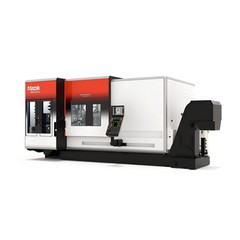
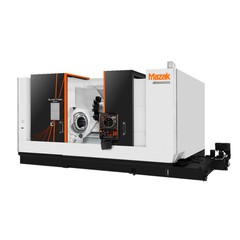
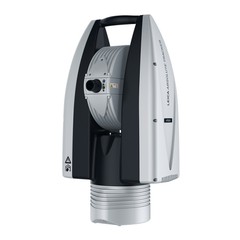
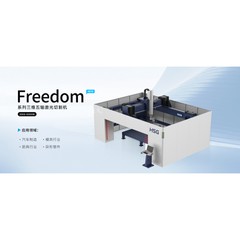
As core equipment in modern manufacturing, the design concept of machining machines not only concerns the performance of the equipment itself but also directly impacts the efficiency, precision, and sustainability of the manufacturing process.Driven by both technological advancements and industry demands, machining machine design has evolved from traditional single-function implementation to a systems engineering approach integrating high precision, high flexibility, intelligence, and green technology, reflecting a deep understanding of the essence of manufacturing and its practical value.
The primary essence of modern machining machine design is "process-oriented structural integration." Designers must thoroughly understand the material properties, geometric features, and precision requirements of typical machining objects from the initial design stage, thereby determining the rigid layout of the machine tool, spindle type, feed mechanism, and toolpath accessibility. By optimizing the geometric stiffness and mass distribution of basic components such as the bed, column, and slide, vibration and deformation during the cutting process are suppressed, thus providing hardware guarantees for consistently achieving micron-level or even higher precision. Simultaneously, organically integrating turning, milling, drilling, and boring processes at the structural and control levels reduces auxiliary time for process transitions, forming a compact and efficient machining chain.
Secondly, there is the "synergistic optimization of accuracy and dynamic performance." High precision does not solely rely on the resolution of the transmission and feedback systems; it also requires a holistic approach to static geometric accuracy, thermal stability, and dynamic response characteristics during the design phase. For example, symmetrical rib layouts balance stress, and the use of materials with low thermal expansion coefficients and forced circulation cooling reduces the impact of thermal deformation on machining dimensions. Introducing high-response servos and advanced vibration reduction technology into the drive system ensures that the machine tool maintains contour accuracy under high-speed start-stop and variable-load cutting conditions. This design philosophy enables the machining center to possess both stability and speed in complex trajectories and multi-process composite machining.
Intelligentization is a crucial extension of modern machining center design. The design must reserve data acquisition and communication interfaces in the hardware architecture, incorporating multi-dimensional sensor information such as force, heat, vibration, and displacement into the control system to support real-time status monitoring, tool life prediction, and adaptive cutting. Modular programming environments and optimized human-machine interaction at the software level allow operators to quickly access process templates, perform simulation verification, and conduct remote diagnostics, lowering the barrier to entry and improving production line flexibility.
The concept of green manufacturing is also deeply integrated into the design. By reducing energy consumption through lightweight structures, optimizing cooling and lubrication circuits to minimize media consumption, and employing low-noise layouts and high-efficiency filtration devices, the design balances environmental friendliness and occupational health. This design philosophy not only aligns with global sustainable development trends but also helps companies reduce overall operating costs.
In summary, the design philosophy of machining centers has evolved from simply pursuing processing capacity to a multi-dimensional integration driven by process requirements, encompassing precision, dynamic performance, intelligence, and environmental friendliness. Adhering to this philosophy, the new generation of machining centers can efficiently produce high-quality parts while providing solid support for high-quality and sustainable development in the manufacturing industry.