

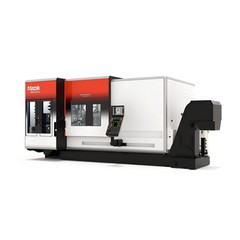
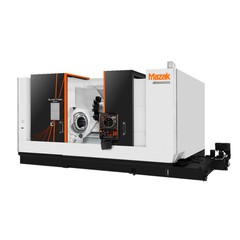

The turning center process flow is a key technical path for transforming part design intent into a finished product. It is based on the core concept of "one-time clamping, multi-process integration," achieving efficient and precise manufacturing of complex rotating parts through scientific and rational process arrangement and control. A standardized process flow not only determines machining quality and efficiency but also directly impacts the rational allocation of production resources and cost control.
The starting point of the process flow lies in the part's manufacturability analysis and machining plan formulation. Based on the part's material properties, structural complexity, precision, and surface quality requirements, it is necessary to determine which processes are suitable for completion in the turning center and to classify the primary and secondary machining sequences. Typically, the positioning datum and clamping scheme are determined first to ensure the relative positional accuracy of subsequent processes. On this basis, processes that can be compounded, such as external diameter machining, end face machining, internal hole machining, thread machining, milling, drilling, and tapping, are integrated to form a continuous and compact process chain, avoiding unnecessary secondary clamping and process jumps.
Entering the specific machining stage, the process flow is generally divided into three levels: roughing, semi-finishing, and finishing. Roughing aims to quickly remove most of the excess material, leaving a uniform and appropriate machining allowance for subsequent processes, while minimizing workpiece deformation caused by cutting forces. Semi-finishing corrects shape errors and approaches the final dimensions, providing a stable geometric basis for finishing. Finishing strictly controls dimensional tolerances and surface roughness according to drawing requirements, often using lower cutting speeds and feed rates to ensure accuracy and surface quality. In multi-process scenarios, the connection between turning, milling, drilling, and other processes must be rationally arranged to prevent tool interference and cycle time imbalance.
Toolpath planning and cutting parameter selection are crucial aspects of the process flow. Appropriate tools should be selected based on different machining characteristics and materials, and reasonable speeds, feed rates, and depths of cut should be set in conjunction with machine tool rigidity and cooling conditions to balance efficiency and tool life. For processes involving C-axis indexing or power turret switching, stable transition actions should be preset in the program to reduce impact and vibration.
Quality control should be implemented throughout the entire process flow. Online measurement or sampling inspection can be arranged after key processes to promptly report dimensional deviations and correct the program or compensate parameters, forming a closed-loop control. After machining, final inspection and data archiving are required to ensure batch consistency and traceability.
Overall, the construction of the turning center process flow must comprehensively consider part characteristics, equipment capabilities, and production goals. Through rigorous process integration, hierarchical machining arrangements, and full-process quality control, the optimal balance between precision, efficiency, and economy can be achieved, providing a solid technical guarantee for modern precision manufacturing.