

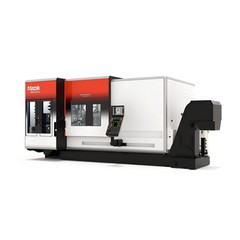
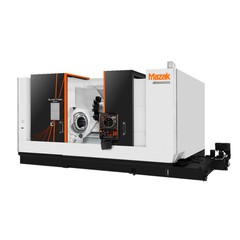
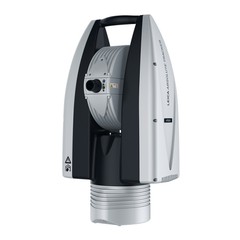
In CNC machining systems, turning centers are not only hardware platforms but also represent a systematic approach integrating process planning, programming control, and process optimization.Their machining method centers on "one-time clamping, multi-process integration," achieving efficient and precise manufacturing of complex rotating parts through scientific process arrangement and intelligent control, providing a replicable and scalable technological paradigm for the manufacturing industry.
The primary method is the pre-positioning of process integration and planning. Unlike the discrete single-process machining of traditional lathes, turning centers require a comprehensive analysis of all elements based on the part drawings before machining. This clarifies the machining sequence of outer diameters, end faces, hole systems, threads, and non-rotational features, and coordinates the resource allocation for turning, milling, drilling, tapping, and other processes. Reasonable process planning reduces tool idle travel and tool change frequency, avoids interference risks, and maximizes the synergistic efficiency of the power turret and C-axis indexing. In practice, prioritizing the machining of datum surfaces and following the principles of "roughing before finishing" and "primary before secondary" are fundamental to ensuring accuracy and efficiency.
Programming control is a crucial aspect of turning center applications. Based on multi-axis CNC systems, programming logic oriented towards complex machining is required, precisely setting the motion trajectory and synchronization relationship of each axis. For milling-turning composite features, functions such as polar coordinate interpolation and helical interpolation are needed to achieve complex contour machining. For axial hole systems or planar milling requiring indexing, the C-axis positioning angle and dwell time must be rationally set to ensure cutting stability. Modern methods emphasize the application of parametric programming and modular templates. By calling standard process libraries, machining programs can be quickly generated, shortening the debugging cycle and reducing the probability of human error.
Process control methods ensure the stability of machining quality. Relying on the machine tool's built-in sensing and feedback system, parameters such as spindle load, tool vibration, and temperature field changes can be monitored in real time. Combined with adaptive control algorithms, feed rate and depth of cut are dynamically adjusted to suppress the impact of tool wear and thermal deformation on accuracy. Furthermore, closed-loop verification methods such as first-piece trial cutting and online measurement can promptly detect and correct program deviations, ensuring consistency in batch production.
In summary, turning center machining methods, supported by process integration, intelligent programming, and process control, construct a complete chain from process design to execution. Mastering and optimizing these methods can significantly improve the machining efficiency and quality reliability of complex parts, providing solid support for technological upgrading in the manufacturing industry.