

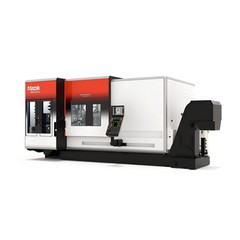
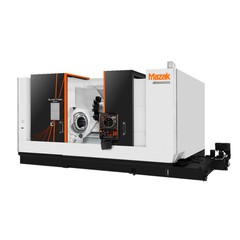
Through long-term application of turning centers, industry users have accumulated rich experience through extensive production practice.This experience not only helps to fully utilize the equipment's performance but also effectively avoids common pitfalls, providing valuable references for similar companies to improve processing quality and efficiency.
The primary experience lies in scientific and rigorous process planning. While turning centers possess multi-process integration capabilities, not all parts are suitable for completing all machining operations in one go. Experience shows that processes that can be completed on the turning center should be rationally divided based on the complexity of the part's structure, material properties, and precision requirements. This avoids blindly pursuing "all-around machining," which can lead to unbalanced cycle times or tool conflicts. Prioritizing the determination of positioning datums and clamping schemes, and following the principle of "datum first, then others; roughing first, then finishing" in scheduling processes, can significantly reduce the frequency of adjustments and potential errors during machining.
Secondly, tool configuration and management are crucial factors affecting effectiveness. Practice has shown that selecting specialized tools for different machining operations, along with appropriate cutting parameters, can not only extend tool life but also maintain stable surface quality. Establishing a tool life monitoring and replacement mechanism, combined with predictive maintenance based on spindle load and vibration signals, can effectively prevent downtime and scrap caused by tool malfunctions. Furthermore, optimizing the turret tool change sequence can reduce idle travel time and improve overall machining speed.
Programming and debugging experience is equally indispensable. The multi-axis linkage characteristics of turning centers require thorough consideration of the coordination and interference checks of each axis's movement during the programming phase, especially for operations involving mill-turn composites and C-axis indexing, which should be simulated and verified in advance. On-site debugging should adopt a gradual approach, first performing single-segment runs to confirm the correct trajectory, and then gradually increasing the speed to rated operating conditions. This minimizes the risk of collisions and shortens the trial cutting cycle.
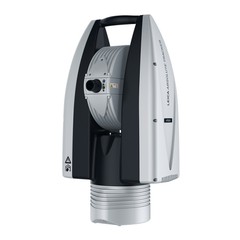
Regarding process quality control, experience emphasizes the importance of online measurement and data traceability. By inspecting critical dimensions on-machine and providing timely feedback and correction, closed-loop control of the machining process can be achieved, improving batch consistency. Recording and analyzing machining data helps identify potential process shortcomings, providing a basis for continuous optimization.
In summary, the efficient application of turning centers relies on forward-looking process planning, meticulous tool management, careful programming and debugging, and closed-loop quality control. Only by systematically integrating these practical experiences into daily management can we achieve synergistic optimization of accuracy, efficiency, and cost in the machining of complex parts.