

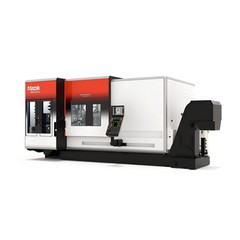
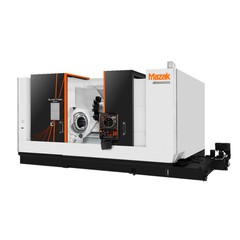
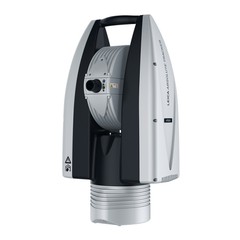
As a key piece of equipment for achieving high-precision material removal and forming, the composition method of a machining machine embodies the system integration and functional synergy of multiple disciplines. It is not merely a superposition of individual mechanical units, but rather an organic integration of subsystems such as load-bearing, drive, control, and auxiliary systems based on machining principles and process requirements, forming a stable, precise, and scalable overall structure that provides reliable support for the manufacturing of complex parts.
The core component of a machining machine is primarily the load-bearing and guiding system. Basic components such as the bed, column, and crossbeam are mostly made of high-strength cast iron or granite, absorbing cutting vibrations and maintaining geometric accuracy through excellent damping characteristics and dimensional stability. The guide rails and slides are made of surface-hardened alloy steel, achieving precise guidance of each coordinate axis through sliding or rolling pairs, ensuring the straightness of the motion trajectory and repeatability.
The drive and transmission system constitutes the power core of the machining machine. Servo motors and spindle motors provide controllable power output, while ball screws, racks, or linear motors transmit rotary or linear motion to the actuators. Combined with a high-precision encoder, this forms a closed-loop feedback, achieving high-speed, high-response position and speed control. The spindle unit is particularly crucial, integrating high-rigidity bearings and a dynamic balancing structure to maintain stable cutting performance across a wide speed range.
The control system, the "nerve center" of the machining center, comprises a CNC device, a human-machine interface, and a programmable logic unit (PLU). It analyzes the machining program, coordinates the movements of each axis and auxiliary functions, such as automatic tool change and cooling start/stop, and integrates real-time monitoring and alarm mechanisms to ensure operational safety and process stability. Modern systems also possess network communication capabilities, allowing integration with manufacturing execution systems for data exchange and remote management.
The auxiliary system encompasses cooling and lubrication, chip removal and protection, and tool magazine management. The coolant circulation device reduces cutting temperature and flushes away chips, while the chip removal mechanism prevents chip accumulation from affecting accuracy and equipment lifespan. The tool magazine and tool changer enhance the continuity of multi-process machining through precise positioning and rapid switching.
In summary, the machining center's design prioritizes stable load bearing, relies on precise drive technology, centers on intelligent control, and ensures comprehensive auxiliary systems, forming a complementary and synergistic organic whole. This systematic construction ensures the reliable performance of the equipment under high load and high precision processing, providing a solid technical platform for modern manufacturing.