

As a high-end piece of equipment used for geometric measurement in modern manufacturing, measuring machines (MCMs) have become a key link in ensuring product quality and achieving closed-loop process control due to their high precision, high efficiency, and multi-dimensional measurement capabilities.Their core function is to quantitatively evaluate the dimensions, form and position tolerances, contours, and positional accuracy of the workpiece through contact or non-contact methods, providing reliable data for the machining process.
From a working principle perspective, a measuring machine typically consists of a high-precision mechanical structure, a detection system, a control system, and data processing software. The mechanical structure often adopts a bridge, gantry, or cantilever layout, using granite, cast iron, or aluminum alloy as the base material, combined with precision guide rails and air bearings to achieve low-friction, high-rigidity three-axis or multi-axis motion. The detection system includes contact trigger probes, scanning probes, and non-contact optical/laser probes, which can be flexibly selected according to the workpiece material, shape, and precision requirements. The control system is responsible for planning the measurement point path, driving the coordinated movement of each axis, and ensuring the repeatability and positioning accuracy of the detection process. The data processing software completes data acquisition, error compensation, and evaluation analysis, outputting inspection reports that conform to national or international standards.
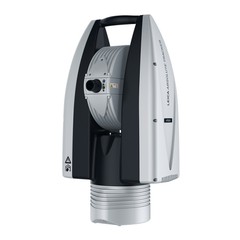
Measuring machines can be classified according to the measurement dimension and application. Coordinate measuring machines (CMMs) are the most typical example, suitable for dimensional and geometric tolerance inspection of complex curved surfaces and box-shaped parts; image measuring machines excel at high-speed measurement of two-dimensional contours and microstructures; articulated arm measuring machines are portable and flexible, often used for on-site or large component inspection; laser trackers and large-size measurement systems serve ultra-large-scale fields such as aircraft, ships, and wind power. Different types of measuring machines complement each other in terms of inspection range, accuracy, and adaptability, forming a complete geometric measurement system.
In application fields, measuring machines are widely used in industries such as automotive, aerospace, mold manufacturing, electronics, and precision machinery. Whether it's the critical bore diameter of an engine block, the profile of an aircraft blade, or the assembly dimensions of a mobile phone casing, all require strict control through measuring machines. By connecting to processing equipment, measuring machines (MMs) can provide online or offline data feedback, supporting real-time correction of process parameters and quality traceability, thus driving the manufacturing process towards digitalization and intelligence.
With advancements in sensing technology and software algorithms, MMs are evolving towards higher precision, faster speeds, and greater flexibility, integrating artificial intelligence and big data analytics to enhance anomaly identification and prediction capabilities. As a quality guardian in precision manufacturing, MMs play an irreplaceable role in improving product consistency, reducing rework rates, and supporting high-quality industrial development.