

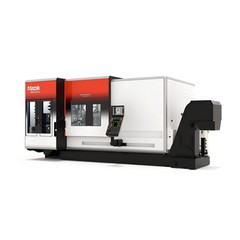
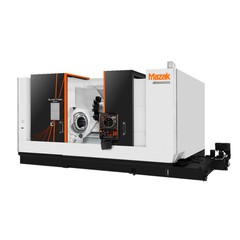
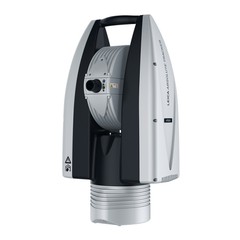
As a core piece of equipment for high-precision geometric measurement, the scientific and standardized operation of a measuring machine directly affects the reliability and repeatability of the test results.The operation process requires not only a thorough understanding of the equipment's functions and software interface, but also adherence to strict pre-operation preparation, measurement execution, and data processing procedures to fully leverage the technical advantages of the measuring machine and ensure test quality.
At the beginning of operation, a comprehensive environmental and equipment check should be performed. Ensure the temperature and humidity of the measuring chamber are within the equipment's specified range, avoiding airflow disturbances and direct heat sources; check that the base, guide rails, and probe system are clean and dust-free, that the air pressure or air flotation device pressure is normal, and that electrical connections are secure. After powering on, a system self-check and zero-return operation should be performed to confirm smooth movement of each axis and effective limit switches, and to complete the probe calibration and probe radius compensation settings. These are prerequisites for ensuring subsequent measurement accuracy.
Workpiece clamping and positioning are crucial aspects of the operation. Appropriate fixtures should be selected based on the workpiece shape and weight to ensure stability and prevent stress deformation. The clamping position should facilitate probe access to all measured elements while avoiding obstruction and interference. For irregular or flexible parts, auxiliary supports or simulated datums can be used to reproduce the positioning state during machining, thereby improving the correspondence between measurement data and process datums.
Measurement path planning must consider the measured elements and accuracy requirements. Utilize the element construction function of the measurement software to clarify the datum and correlation sequence of the measured features, and rationally set the density and distribution of measurement points to ensure sufficient reflection of shape and position errors. For complex curved surfaces or critical dimensions, a scanning mode should be used to acquire continuous contour data to improve the reliability of the assessment. After path generation, simulation checks should be performed to confirm the absence of collision risks and optimize idle travel to improve inspection efficiency.
During formal measurement, a stable environment should be maintained, avoiding personnel movement and equipment vibration interference. After starting the automatic measurement program, the probe status and equipment operation information must be monitored in real time. Any abnormalities should be immediately paused and the cause investigated. Upon completion of the measurement, the completeness of the collected data should be verified. Missing or outlier points should be remeasured or removed to ensure the dataset meets the evaluation requirements.
Data processing and report generation must be performed in accordance with relevant standards. Software should be used for geometric element fitting, form and position tolerance calculation, and statistical process analysis, outputting intuitive graphical and numerical results, and indicating measurement uncertainty and testing conditions. The inspection report should be archived for future reference and linked to machining process parameters to provide a basis for subsequent quality improvement.
After operation, the probe and guide rail should be cleaned promptly, the workpiece removed, and the equipment reset. The air and power sources should be turned off, and usage records should be kept. Regularly reviewing the operation process and data quality, and continuously optimizing path and parameter settings, can continuously improve the application efficiency of the measuring machine.
In summary, the operation method of a measuring machine covers inspection preparation, workpiece positioning, path planning, measurement execution, data processing, and equipment restoration. Only by strictly following regulations and operating meticulously can the accuracy and traceability of inspection results be ensured, providing a solid guarantee for manufacturing quality.