

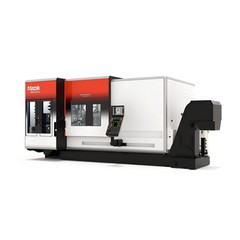
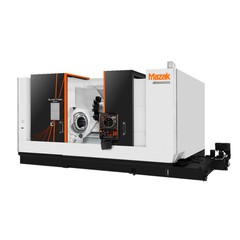
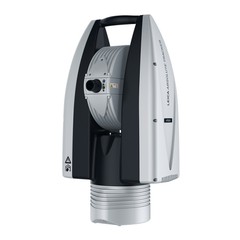
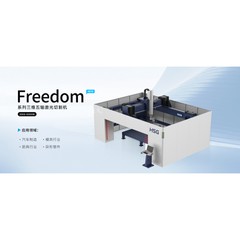
In the high-end manufacturing sector, machining centers, as key equipment integrating multiple processes such as milling, drilling, and boring, directly impact the precision, efficiency, and consistency of products. As the manufacturing industry moves towards intelligence and precision, the requirements for the comprehensive performance of machining centers continue to rise, driving technological iteration and expanding application scenarios.
The performance of machining centers can be analyzed from multiple dimensions. Firstly, there is the stability brought by a high-rigidity structure. By optimizing the bed layout and material ratio, and combining finite element analysis to strengthen weak points, modern equipment can effectively suppress cutting vibrations, ensuring micron-level machining accuracy even under high-speed, heavy-load conditions. Secondly, there is dynamic response capability, which relies on the synergy of high-performance servo systems and precision transmission chains-the widespread adoption of linear motors and high-resolution grating rulers enables feed speeds to exceed hundreds of meters per minute, while simultaneously achieving nanometer-level position feedback, meeting the precision forming requirements of complex curved surfaces and thin-walled parts. Thirdly, thermal stability control employs a symmetrical structural design, intelligent temperature control cooling, and thermal error compensation algorithms to significantly reduce the interference of environmental temperature changes and spindle heating on machining accuracy, ensuring reliability for long-term continuous operation.
Intelligent upgrades are reshaping performance boundaries. Equipped with a multi-channel CNC system and adaptive machining module, the equipment can sense tool wear, load fluctuations, and other conditions in real time, dynamically adjusting cutting parameters to balance efficiency and quality. Some models integrate industrial internet interfaces, supporting remote monitoring and process optimization, driving the transformation of production processes from "experience-driven" to "data-driven." Furthermore, enhanced composite machining capabilities expand application breadth. The integration of technologies such as mill-turning and five-axis linkage allows a single workstation to complete the entire machining process from blank to finished product, shortening turnaround time and reducing cumulative errors.
Looking to the future, the introduction of lightweight design, green energy-saving technologies, and AI deep learning will further unleash the potential of machining centers. In high-end fields such as aerospace and new energy equipment, their supporting role in the efficient and precise manufacturing of complex components is becoming increasingly prominent. Continuous performance evolution not only demonstrates breakthroughs in manufacturing technology, but also serves as a core engine for industrial upgrading, injecting strong momentum into the global industrial system.