

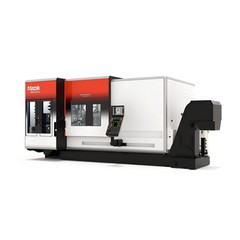
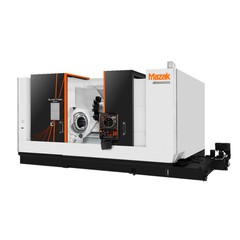
As the core equipment of modern CNC machining systems, machining centers integrate multiple processes such as milling, drilling, boring, and tapping, and are equipped with automatic tool changers and multi-axis linkage functions, exhibiting distinct characteristics in structure, performance, and application modes.These characteristics collectively constitute their technological advantages of high efficiency, precision, and flexibility, making them indispensable key equipment in high-end manufacturing and large-scale production.
Firstly, structural integration and functional integration are significant features of machining centers. The machine tool body adopts a high-rigidity bed and precision guideways to ensure geometric accuracy and dynamic stability under high-speed cutting and heavy load conditions; the CNC system, as the control center, can analyze complex machining programs and drive multi-axis coordinated motion; the automatic tool changer (ATC) and tool magazine enable rapid tool switching during machining, eliminating the tediousness and errors of manual tool changing; auxiliary systems such as cooling and lubrication, chip removal, and hydraulic and pneumatic systems are also highly integrated with the main machine, forming a complete machining closed loop. This integrated design allows multiple processes to be completed in a single setup, effectively reducing the number of setups and auxiliary time.
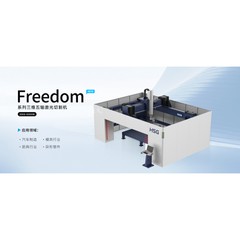
Secondly, it excels in multi-axis linkage and complex surface machining capabilities. Modern machining centers generally possess three or more linear and rotary axis combinations, with five-axis linkage being particularly representative, enabling high-precision machining of free-form surfaces in a single setup. Multi-axis collaboration not only avoids the cumulative errors caused by multiple positioning operations but also optimizes tool orientation to reduce cutting blind spots, improving surface quality and machining efficiency. Therefore, it is widely used in aerospace impellers, precision molds, and medical implants.
Thirdly, high precision and high stability are maintained throughout the entire operation. A high-rigidity structure, combined with precision transmission components (such as ball screws and linear motors) and a fully closed-loop or semi-closed-loop position feedback system, achieves positioning accuracy and repeatability down to the micrometer level. Constant temperature cooling, spindle thermal deformation compensation, and vibration suppression technologies further ensure dimensional consistency during long-term continuous machining, meeting stringent tolerance requirements.
Fourthly, it boasts a high level of automation and flexibility. Automatic tool changers, pallet exchangers, and multi-table configurations enable continuous production with minimal or no human intervention, improving equipment utilization. The programmable nature of the CNC system and modular tooling and fixture configurations allow machining centers to quickly switch between machining tasks for different parts, adapting to the flexible manufacturing needs of multi-variety, small-batch production, aligning with the personalized and customized development trends of modern manufacturing.
Fifth, intelligent monitoring and scalability are continuously enhanced. Modern machining centers are equipped with vibration, temperature, and load sensors and data acquisition systems, enabling real-time monitoring of operating status and achieving tool wear prediction, fault warning, and machining parameter optimization. Open CNC platforms and network interfaces support integration with Manufacturing Execution Systems (MES) and Enterprise Resource Planning (ERP) systems, providing a foundation for the construction of digital workshops and smart factories.
Sixth, energy conservation, environmental protection, and wide process adaptability. By optimizing transmission efficiency and employing micro-lubrication and circulating cooling technologies, machining centers improve cutting performance while reducing energy consumption and cutting fluid consumption. Different structural forms (vertical, horizontal, gantry) and spindle configurations can cover a wide range of machining needs, from small precision parts to large structural components. Material adaptability also encompasses diverse working conditions, including aluminum, steel, titanium alloys, and composite materials.
Overall, machining centers are characterized by integrated structure, multi-axis linkage, high precision and stability, automated flexibility, intelligent scalability, and broad process adaptability, forming efficient, precise, and intelligent machining capabilities. These characteristics not only solidify their pillar position in modern manufacturing but also provide solid technical support for driving the industry towards digitalization, intelligence, and high quality.