

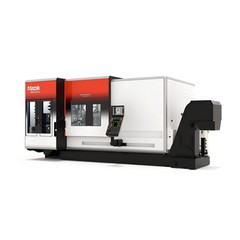
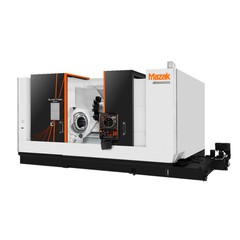
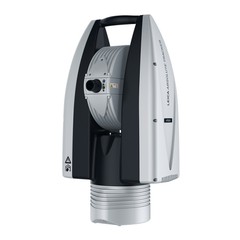
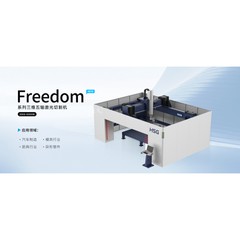
In modern manufacturing systems, machining centers have evolved into various forms and configurations to meet different process requirements and application scenarios.Understanding the differences between various machining centers helps companies make accurate judgments in equipment selection and production layout, thereby improving processing efficiency and resource utilization.
Structurally, vertical machining centers and horizontal machining centers constitute the basic classification. Vertical machining centers have a vertically arranged spindle axis, suitable for planar milling, drilling, and two-dimensional contour machining. They have the advantages of small footprint and convenient clamping, and are often used for batch production of small and medium-sized parts. Horizontal machining centers have a horizontal spindle axis, and with a rotary table, they can achieve multi-face machining. They excel in the manufacturing of box-type and complex shell parts, but have a relatively large footprint and initial investment. Gantry machining centers are characterized by elevated crossbeams and double-column supports, offering high rigidity and a large stroke. They are suitable for heavy cutting of large plates, molds, and aerospace structural parts, and their stability is particularly significant under long overhang conditions.
Based on degrees of freedom of motion, three-axis, four-axis, and five-axis machining centers each have their own characteristics. Three-axis models have a relatively simple structure and controllable cost, meeting the machining needs of most common geometric shapes. Four-axis machining centers add a fourth axis of rotation around a certain axis, allowing for the machining of side or circumferential features in a single setup, reducing repetitive positioning errors. Five-axis machining centers possess two rotational degrees of freedom, enabling omnidirectional adjustment of tool posture and offering irreplaceable advantages in machining complex free-form surfaces, blades, and irregularly shaped parts such as medical implants; however, their control system and programming complexity are significantly increased.
Drive and control methods also create distinguishing dimensions. Traditional models often use a combination of mechanical transmission and servo motors, simplifying maintenance; linear motor-driven machining centers offer higher dynamic response and speed, suitable for high-speed precision cutting. In terms of intelligence, some high-end models integrate online monitoring, adaptive control, and network interconnection functions, allowing for real-time parameter optimization and data feedback during machining, building flexible manufacturing capabilities.
In summary, the differences between machining centers lie in their structural layout, number of axes, drive type, and level of intelligence. Each type achieves a differentiated balance in terms of precision, efficiency, applicability, and investment cost. Understanding these differences can provide manufacturing enterprises with technical paths that match their product characteristics and production plans, thereby establishing a robust machining support system in a highly competitive market.