

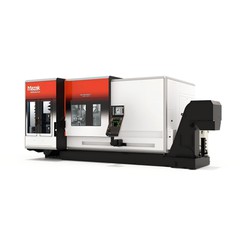
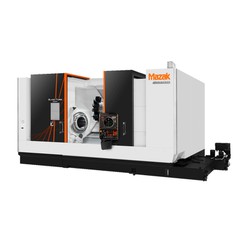
As high-precision manufacturing equipment, the stable operation and quality assurance of a machining machine depend not only on its own performance but also on standardized operation and meticulous attention to detail during use. In actual operation, precautions must be implemented from multiple dimensions, including environment, operation, maintenance, and safety, to control risks, extend equipment life, and maintain consistent precision.
First, environmental compliance should be prioritized. Machining machines should be placed in locations with controlled temperature and humidity and meeting cleanliness standards, avoiding high temperatures, humidity, dust, and strong electromagnetic interference that could affect their mechanical and electrical systems. The ground should be flat and firm to prevent external vibration sources from directly transmitting to the equipment foundation. Vibration isolation measures should be taken when necessary to ensure the movement accuracy of guide rails and transmission components.
Pre-operation checks and preparations are essential. It should be confirmed that the lubricating oil level, coolant concentration, and supply pressure are within the normal range. The pneumatic system should be checked for leaks, and the sensitivity and reliability of the limit switches and emergency stop functions of each axis should be verified. The tool clamps must be secure and have good coaxiality to avoid vibration or dimensional deviations caused by improper clamping. After initial operation or prolonged periods of inactivity, thorough preheating is essential to ensure the spindle and moving parts reach thermal equilibrium, minimizing initial machining errors.
During machining, strictly adhere to process parameters and procedures. Do not arbitrarily change feed rate, depth of cut, or spindle speed, especially during high-speed cutting and machining of thin-walled parts. Parameters should be gradually optimized based on trial cuts to prevent overload and thermal deformation. Closely monitor spindle load, vibration, and abnormal noise. Immediately stop the machine for inspection if any abnormalities are detected to prevent further damage.
Daily maintenance and cleaning should be routinely implemented. After operation, promptly remove chips and oil. Regularly lubricate guideways, lead screws, and lead screw nut assemblies. Check the cooling and chip removal systems for blockages to prevent chip accumulation from affecting the accuracy of moving parts or causing overheating. Maintain ventilation and dust protection for the electrical control cabinet, and regularly clean filters and fans to ensure good heat dissipation.
Safe operation is the bottom line requirement. Operators should wear protective eyewear and appropriate clothing, and long hair and loose accessories must be securely fastened. It is strictly forbidden to open the protective cover or manually intervene while the equipment is running. In case of any abnormality or alarm, the emergency stop button should be pressed immediately, and the incident should be reported and handled according to procedures.
In summary, the precautions for using machining centers cover environmental compliance, pre-operation inspection, strict adherence to processes, proper maintenance, and safety as a priority. Only by integrating these requirements into daily practice can we ensure the efficient, stable, and safe operation of the equipment, providing a reliable guarantee for precision manufacturing.