

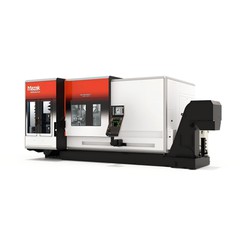
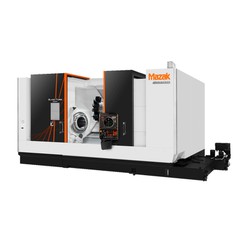

Investing in a CNC Turning Center is one of the most critical capital expenditure decisions for any precision machine shop, contract manufacturer, or OEM plant. The right machine tool directly governs production throughput, part accuracy, scrap rates, and long-term operating profitability.
However, navigating the wide spectrum of machine configurations-such as flat-bed vs. slant-bed, 2-axis vs. multi-tasking (Y-axis / C-axis), and single-spindle vs. twin-spindle-can be overwhelming. This guide outlines the key technical factors and evaluation criteria to help procurement teams and manufacturing engineers select the ideal CNC turning center for their production requirements.
Structural Architecture: Slant Bed vs. Flat Bed Lathes
The foundational design of the lathe determines its rigidity, cutting stability, and chip management
| Structural Feature | Slant Bed CNC Lathe (e.g., 30° / 45°) | Traditional Flat Bed CNC Lathe |
|---|---|---|
| Rigidity & Thermal Stability | Excellent; cutting forces direct into casting | Moderate; prone to deflection under heavy loads |
| Chip Evacuation | Gravity-assisted; chips slide directly to conveyor | Chips accumulate on bed ways; manual clearing required |
| Ergonomics & Loading | Operator is closer to the spindle and chuck | Longer reach required for part setup |
| Best Application | High-volume production, high-precision & heavy turning | Large-diameter low-volume turning, maintenance shops |
Recommendation: For industrial manufacturing requiring sustained precision (positioning accuracy ≤ ±0.005 mm) and high feed rates, a slant-bed CNC turning center is the definitive industry standard.
Understanding part geometry dictates whether a standard 2-axis lathe or an advanced multi-tasking turning center is needed:
2-Axis CNC Lathes (X / Z Axes):
Best for: Pure rotational cylindrical parts (bushings, basic pins, standard flanges, fittings).
Advantage: Cost-effective, simple programming, rapid setup times.
3-Axis & 4-Axis Turning Centers :
Best for: Parts requiring axial and radial face drilling, cross-hole tapping, and basic slotting.
Advantage: Eliminates secondary drill press operations.
Multi-Tasking Turning Centers with Y-Axis :
Best for: Complex off-center milling, hex flats, keyways, and curved contours on cylindrical stock.
Advantage: Achieves complete "Done-in-One" processing, cutting overall lead times by 30% to 50%.
Twin-Spindle / Twin-Turret Centers:
Best for: High-volume automotive and hydraulic components requiring both end operations without manual re-chucking.
When reviewing machine specification sheets, pay close attention to:
Max. Turning Diameter & Machining Length
Spindle Power & Torque Curve
Turret Interface & Indexing Speed
Guideway Type (Linear Motion vs. Box Ways)
CNC Control System Compatibility

Need Custom Engineering Guidance?
At Hermens Industrial, our application engineering team offers complimentary part drawing reviews and cycle-time calculations to ensure you invest in the exact CNC turning center tailored to your throughput and budget goals.
Explore our full series of slant-bed, Swiss-type, and multi-tasking turning centers at https://www.hermensindustrial.com/cnc-turning-centers/ or contact us directly at liu_jincheng@hzhemen.com.